Trụ Sở


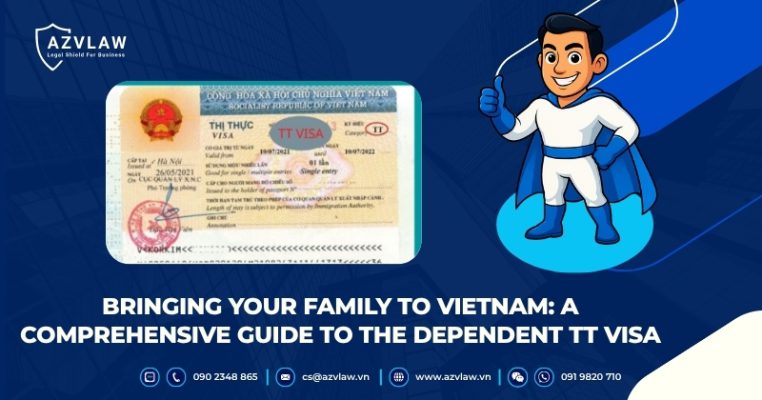
Bringing Your Family to Vietnam: A Comprehensive Guide to the Dependent TT Visa
As an increasing number of foreign professionals, investors, and even those with Vietnamese family ties make Vietnam their home, a common and deeply personal concern emerges: how to bring loved ones to live alongside them. The Vietnam Dependent TT Visa (often referred to as a “family visa”) is precisely the answer. I frequently meet clients who feel overwhelmed by the thought of navigating immigration processes in a new country, particularly when their family’s unity is at stake. They’re looking for clarity, reliability, and peace of mind.
1. What is a Vietnam Dependent TT Visa?
The Vietnam Dependent TT Visa, officially symbolized as a TT visa, serves as Vietnam’s dedicated “family visa.” It’s a specialized entry permit designed to allow certain family members of eligible individuals to enter and reside long-term in Vietnam.
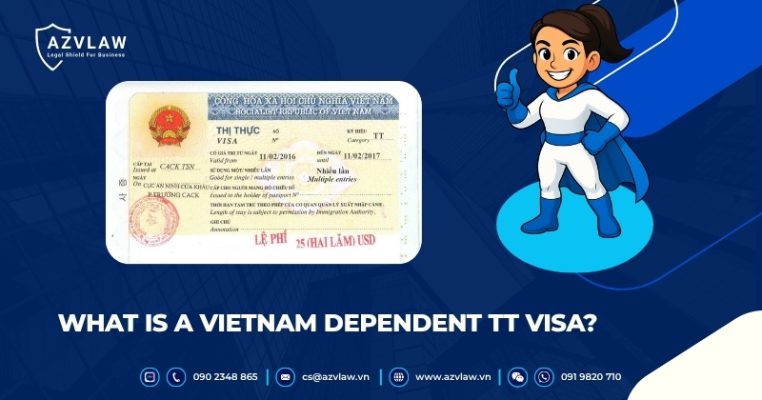
Whether you are a foreign expert, a long-term investor, a student, or a Vietnamese citizen, this visa category aims to facilitate family reunification, enabling your spouse, children, or parents to live with you legally within the country’s borders. It’s a testament to Vietnam’s commitment to supporting expatriate and local families.
2. Who is Eligible for a Vietnam Dependent TT Visa?
The Vietnam Dependent TT Visa is designed for family members of foreign nationals who are legally residing and working in Vietnam. This visa allows spouses, children, and in some cases, other close relatives to live in Vietnam alongside their sponsor. However, not everyone qualifies automatically.
To ensure eligibility, it’s important to understand the legal criteria, relationship requirements, and documentation involved. In this section, we’ll break down who can apply for a TT visa and under what conditions.
Eligibility for the Vietnam Dependent TT Visa is clearly defined by Vietnamese immigration law, particularly the Law on Entry, Exit, Transit, and Residence of Foreigners in Vietnam. The TT visa is specifically granted to:
- Family Members of Vietnamese Citizens: This includes the parents, spouse, or children of a Vietnamese citizen. This pathway is crucial for reuniting mixed-nationality families.
- Family Members of Certain Foreigners in Vietnam: Spouses or children under 18 years of age of foreigners who hold specific types of Vietnamese visas or Temporary Residence Cards (TRCs). The eligible visa types for the main sponsor typically include:
- LV1 & LV2: For those working with state bodies, political organizations, or the Vietnam Chamber of Commerce and Industry.
- LS: For foreign lawyers practicing in Vietnam.
- DT1, DT2, DT3: For foreign investors (categorized by investment capital).
- NN1 & NN2: For managers/heads of international organizations, foreign NGOs, or foreign trader representative offices/branches.
- DH: For foreign students or interns.
- PV1: For resident foreign journalists.
- LD1 & LD2: For foreigners working in Vietnam (LD1 for work permit exemption, LD2 for those requiring a work permit).
Understanding the main applicant’s visa type is the first critical step in determining the dependent’s eligibility.
3. Who Can Sponsor a Vietnam Dependent TT Visa?
Just like many other Vietnamese visa types, securing a Vietnam Dependent TT Visa requires a recognized sponsor in Vietnam. The sponsor acts as the legal guarantor for the dependent, asserting a direct family relationship (marriage, parent-child).
The individuals or entities capable of sponsoring foreign family members for a TT visa in Vietnam include:
- Vietnamese Citizens: A Vietnamese citizen can sponsor their foreign spouse, biological parents, adoptive parents, biological children, or adopted children.
- Foreigners Holding Specific Visas/TRCs: If a foreigner holds one of the eligible Vietnamese visas (LV1, LV2, LS, DT1, DT2, DT3, NN1, NN2, DH, PV1, LD1, LD2) or a corresponding Temporary Residence Card, they can sponsor their spouse or children under 18 years of age. Critically, this typically requires the approval or endorsement of the organization or company for which the sponsor is working in Vietnam.
The sponsoring entity or individual plays a vital role in the application process, verifying the relationship and accepting responsibility for the dependent’s stay.
4. Where to Apply for a Vietnam Dependent TT Visa?
Applying for a Vietnam Dependent TT Visa requires submitting your application to the appropriate Vietnamese immigration authority, depending on your location and visa type. If you are outside of Vietnam, you can apply through the Vietnamese Embassy or Consulate in your home country.
If you are already in Vietnam on a valid visa, you may submit your application directly at the Immigration Department. Understanding where and how to apply is crucial to avoiding delays and ensuring a smooth process for bringing your family to Vietnam.
The convenience of your Vietnam Dependent TT Visa application largely depends on the dependent’s current location:
- From Outside Vietnam: If the dependent is currently outside Vietnam, they can obtain their TT visa stamp at a Vietnamese Embassy or Consulate General in their country of residence, or, in some cases (if an approval letter specifies it), directly upon arrival at a Vietnam international airport.
- From Within Vietnam: If the dependent is already in Vietnam on another type of valid visa and wishes to convert it to a TT visa, the application is submitted directly to the Vietnam Immigration Department offices within Vietnam. This means the dependent does not need to leave the country and re-enter.
Choosing the correct application pathway is crucial for a smooth process.
5. How to Obtain Your Vietnam Dependent TT Visa
The procedure for acquiring your Vietnam Dependent TT Visa varies slightly depending on whether the dependent is currently in Vietnam or applying from abroad. Each method requires meticulous preparation and adherence to specific steps.
5.1 Applying from Within Vietnam (Visa Conversion)
This pathway involves converting an existing visa to a TT visa stamp while the dependent is already in Vietnam.
Required Documents for Converting to a TT Visa in Vietnam:
- Common Documents for All Sponsors:
- Form NA5: Application for issuance/extension of visa/TRC for foreigners in Vietnam.
- Original Passport of the Dependent: Must be valid for at least 6 months, with at least one blank page, and hold a currently valid Vietnam visa.
- Two 4x6cm Portrait Photos: Taken recently.
- If the Sponsor is a Vietnamese Citizen:
- Form NA5 must be certified by the Public Security of the Ward/Commune where the sponsor’s permanent address is registered.
- Notarized copies of the sponsor’s ID Card and Family Book.
- Documents proving family relationship (e.g., marriage certificate, birth certificate, household registration excerpt). These documents, if issued abroad, must be subject to Vietnam consular legalization and certified translation into Vietnamese.
- If the Sponsor is a Foreigner:
- Form NA5 must be certified by the organization/company for which the sponsor is working.
- Copy of the sponsor’s valid passport and valid Vietnam visa/Temporary Residence Card.
- Documents proving family relationship (e.g., marriage certificate, birth certificate). These documents must be consular legalized and officially translated into Vietnamese.
- Notarized copies of the sponsoring organization’s/company’s documents: Business Registration Certificate/Investment Certificate/Certificate of Establishment of Representative Office, Certificate of Seal Template Registration, and Certificate of Tax Registration.
- A Letter of Introduction (or Power of Attorney) authorizing the person (e.g., AZVLAW representative) to follow the visa application procedure at the Vietnam Immigration Department.
Application Procedure in Vietnam:
- Document Preparation: Gather all required documents as listed above.
- Submission: The sponsor or their authorized representative (like AZVLAW) submits the complete dossier to one of the Vietnam Immigration Department offices:
- Hanoi: 44-46 Tran Phu, Ba Dinh District.
- Da Nang: 78 Le Loi, Thach Thang, Hai Chau.
- Ho Chi Minh City: 333-335-337 Nguyen Trai, District 1.
- Receipt and Result Collection: A receipt indicating the date for result collection will be issued. On the appointed date (typically 5-7 working days), the TT visa stamp will be affixed to the dependent’s passport. The dependent is not required to leave Vietnam to activate this visa.
5.2 Applying from Outside Vietnam (Visa Approval Letter)
If the dependent is not currently in Vietnam, the process begins with obtaining a TT visa approval letter from Vietnam, which then allows them to get the visa stamp abroad or upon arrival.
Required Documents for TT Visa Approval Letter:
- Common Documents for All Sponsors:
- Form NA2: Request for pre-clearance of foreigners’ entry into Vietnam. This form should specify where the TT visa stamp will be picked up (e.g., a specific Vietnamese embassy/consulate or a Vietnam international airport).
- Copy of the dependent’s valid passport (valid for at least 6 months, with at least 2 blank pages).
- Copy of the sponsored person’s valid passport.
- If the Sponsor is a Vietnamese Citizen:
- Form NA2 must be certified by the Public Security of the Ward/Commune where the sponsor’s permanent address is registered.
- Notarized copies of the sponsor’s ID Card and Family Book.
- Documents proving family relationship (e.g., marriage certificate, birth certificate, household registration excerpt). If issued abroad, these must be subject to Vietnam consular legalization and certified translation into Vietnamese.
- If the Sponsor is a Foreigner:
- Form NA2 must be certified by the organization/company where the sponsor is working.
- Copy of the sponsor’s valid passport and valid Vietnam visa/Temporary Residence Card.
- Documents proving family relationship (e.g., marriage certificate, birth certificate). These must be consular legalized and officially translated into Vietnamese.
- Notarized copies of the sponsoring organization’s/company’s documents: Business Registration Certificate/Investment Certificate/Certificate of Establishment of Representative Office, Certificate of Seal Template Registration, and Certificate of Tax Registration.
- A Letter of Introduction stating the person authorized to follow the visa application procedure at the Vietnam Immigration Department.
Process for Obtaining the TT Visa Approval Letter:
- Document Preparation: Gather all required documents.
- Submission: The sponsor or their authorized representative submits the dossier to the Vietnam Immigration Department.
- Approval Letter Issuance: Upon approval (typically 5-7 working days), the Immigration Department issues a TT visa approval letter. This letter will be sent as a scanned copy to the sponsor.
Getting the TT Visa Stamp Abroad/On Arrival:
- Dependent Preparation: The dependent receives the scanned approval letter and prepares:
- A printout of the approval letter scan.
- A completed Vietnamese visa application form (also known as the Vietnam entry and exit form, available online or at the visa pick-up point).
- Two 4x6cm portrait photos.
- Original passport (valid for at least 6 months with at least 2 blank pages).
- Visa Stamp: The dependent then presents these documents at the Vietnamese Embassy/Consulate abroad (if specified in the letter) or at the Visa On Arrival counter at a Vietnam international airport to receive the TT visa stamp.
6. Understanding Your TT Visa Duration and Extensions: Planning for the Long Term
A common concern for families is how long their Vietnam Dependent TT Visa will be valid for and whether it can be extended. This is crucial for long-term planning and ensuring continuous legal residence for your loved ones.
Initial Validity Period: The TT visa’s validity is often linked to the validity of the main sponsor’s visa or Temporary Residence Card. It typically has a maximum validity of up to 12 months (though it can be shorter if the sponsor’s visa expires earlier, or if the dependent’s passport has less than 6 months’ validity).
Extensions and Temporary Residence Cards (TRCs): If the sponsor holds a Temporary Residence Card (TRC), the dependent can often apply for a TT Temporary Residence Card directly. A TRC offers a longer period of stay (up to the duration of the sponsor’s TRC, which can be up to 5 years) and allows for multiple entries without needing a new visa. This is generally the most stable and convenient option for long-term family residence.
Renewal/Extension Process: If the dependent only has a TT visa, it can be extended in Vietnam, provided the sponsor’s visa/TRC remains valid and all conditions are still met. The process is similar to the initial in-Vietnam application, requiring updated documents.
Proactive planning for visa and TRC renewals is essential to maintain legal status and avoid overstay penalties.
7. Common Pitfalls in TT Visa Applications and How AZVLAW Provides Solutions
While the TT visa offers a valuable pathway for family reunification in Vietnam, many applicants encounter unexpected obstacles during the application process. Common pitfalls include incomplete documentation, misunderstandings about eligibility, incorrect visa sponsorship, or delays caused by unclear legal requirements.
These issues can lead to rejections or processing setbacks. At AZVLAW, we help you avoid these mistakes by offering personalized legal guidance, document verification, and end-to-end support—ensuring your TT visa application is accurate, compliant, and on track for approval.
While the process for obtaining a Vietnam Dependent TT Visa seems straightforward on paper, real-world applications often encounter common challenges that can lead to significant delays or even rejections. At AZVLAW, we’ve seen these pitfalls firsthand and have developed solutions to navigate them:
- Incomplete or Incorrect Documentation: Even minor errors, missing certifications, or outdated forms are frequently cited reasons for application rejection.
AZVLAW’s Solution: We provide a precise, customized document checklist tailored to your specific family situation and sponsor type. Our team meticulously reviews every document before submission, ensuring accuracy and compliance with the latest regulations.
- Improper Consular Legalization/Translation: Foreign-issued documents (like marriage or birth certificates) often need specific consular legalization in your home country before being translated into Vietnamese and notarized here. This is a common bottleneck.
AZVLAW’s Solution: We guide you through the exact steps for consular legalization in your country and manage the certified translation and notarization process in Vietnam, ensuring all foreign documents meet local legal standards.
- Proof of Relationship Issues: Establishing a clear, legally recognized family relationship can sometimes be complex, especially if records are old or from different legal systems.
AZVLAW’s Solution: We help you identify and prepare the strongest possible evidence of family relationship, advising on supplementary documents if primary ones are insufficient.
- Sponsor Eligibility and Company Endorsement: Ensuring the main sponsor’s visa/TRC is valid and that their employing organization provides proper endorsement can be tricky.
AZVLAW’s Solution: We verify the sponsor’s eligibility and work directly with their company’s HR/legal department to secure the necessary official support letters and corporate documents.
- Navigating Bureaucracy: Interacting with immigration officials, understanding their specific requests, and responding promptly can be challenging without local expertise.
AZVLAW’s Solution: We act as your direct liaison, submitting documents, following up on your behalf, and addressing any queries from the Immigration Department, saving you invaluable time and stress.
By anticipating these common issues, our goal is to streamline your application and provide the peace of mind that your family’s immigration process is in capable hands.
8. Why Choose AZVLAW for Your Vietnam Dependent TT Visa Application?
The Vietnam Dependent TT Visa application process, while designed for family reunification, involves intricate legal and administrative steps. Entrusting this crucial process to an experienced legal partner can make all the difference. At AZVLAW, we don’t just process applications; we provide a holistic service that prioritizes your family’s future in Vietnam.
Our dedicated consultants and legal experts will:
- Provide a Tailored Document Checklist: Based on your unique family situation and the sponsor’s status, we’ll give you a precise list of required documents.
- Meticulous Document Preparation: We assist in completing all forms accurately and prepare your entire application package, ensuring no detail is overlooked.
- Expert Guidance on Legalization & Translation: We navigate the complexities of consular legalization and certified translation for all foreign documents.
- Proactive Updates & Follow-up: We stay in constant communication with the Vietnam Immigration Department, providing you with real-time updates and addressing any potential issues promptly.
- Direct Submission & Collection: Our team handles the direct submission of your application and collection of the results, saving you time and the hassle of navigating government offices.
- Post-Visa Support: We can also advise on subsequent steps, such as applying for a Temporary Residence Card for a longer stay, ensuring your family’s continued legal status in Vietnam.
Your family’s ability to live together in Vietnam is our priority. With AZVLAW, you gain a partner who is not only well-versed in immigration law but also deeply committed to providing clear, empathetic, and effective solutions.
For a confidential consultation regarding your Vietnam Dependent TT Visa application or any other complex immigration matters for your family in Ho Chi Minh City or anywhere in Vietnam, do not hesitate to contact AZVLAW today via HOTLINE: 090.2348.865. We are here to help you reunite with your loved ones with unwavering confidence.