Trụ Sở


Reliable Vietnam Visa Service for Foreigners
For many international travelers planning a visit to Vietnam, the Vietnam e-visa has revolutionized the entry process, offering a convenient and streamlined online application system. This electronic visa allows eligible foreign nationals to apply for their entry permit from anywhere in the world, often for tourism, business, or family visits. While designed for simplicity, understanding the precise requirements, common pitfalls, and ensuring a successful submission can still be challenging. At AZVLAW, we provide expert assistance to navigate the nuances of the Vietnam e-visa application, ensuring your travel plans proceed without unnecessary delays or complications.
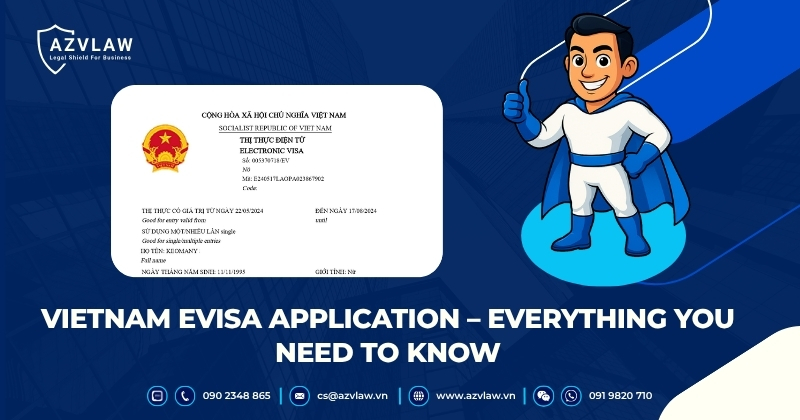
1. What is an E-visa?
A visa, or “thị thực,” is an official document issued by the competent authorities of Vietnam, permitting foreign nationals to enter the country. Among various visa types, the E-visa (electronic visa) stands out as a modern, digitally issued permit that significantly streamlines the entry process for foreigners coming to Vietnam for tourism, business, or commercial purposes.
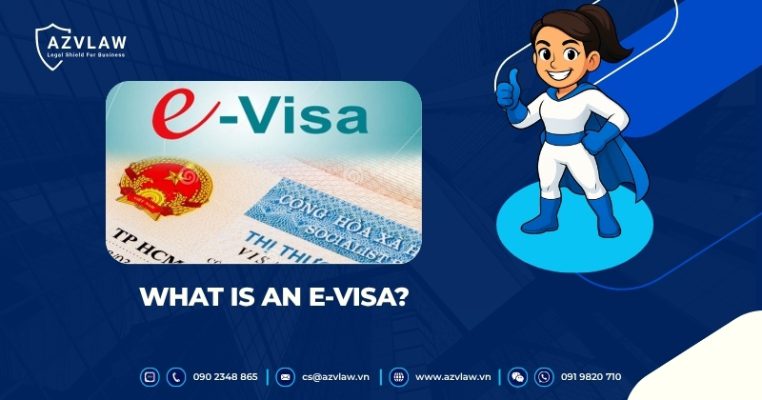
With an E-visa, applicants can complete all necessary procedures online via the Vietnamese Government’s official website, including fee payment, eliminating the need for tedious embassy visits or prolonged waiting periods. It’s crucial to understand, however, that E-visa issuance is limited to eligible nationalities and specific ports of entry designated by the Government.
An E-visa typically offers a maximum validity of 90 days, and depending on the specific regulations of your visa type, it can facilitate either single or multiple entries into the country.
2. Navigating Eligibility: Who Qualifies for an E-visa?
Before applying for a Vietnam e-visa, it’s essential to understand who is eligible under current immigration regulations. The e-visa program is available to citizens of select countries and is intended for short-term stays for purposes such as tourism, business, or visiting relatives. However, eligibility depends not only on nationality but also on the purpose of entry, passport validity, and other factors.
To successfully obtain an E-visa for Vietnam, foreign nationals must meet the following essential conditions:
- Nationality: The applicant must be a citizen of a country explicitly approved for electronic visa issuance by the Government of Vietnam. While most nationalities are currently eligible to apply for an E-visa, citizens from certain African and Central Asian countries may encounter more stringent conditions or complexities in the application process.
- Valid Passport: You must possess a valid passport, and crucially, you must not fall into any of the categories currently restricted from entering Vietnam. These restrictions include:
- Children under 14 years old not traveling with a parent, legal guardian, or authorized person.
- Individuals found to have falsified documents or provided misleading information during a previous visa application.
- Those suffering from mental illnesses or infectious diseases posing a public health risk.
- Individuals deported from Vietnam within three years from the effective date of the deportation decision.
- Those compelled to exit Vietnam within six months from the effective date of the forced exit decision.
- Individuals prohibited from entry due to epidemic prevention measures.
- Persons barred from entry for reasons related to natural disasters, national defense, security, public order, or public safety.
Only applicants who fully satisfy these conditions can proceed with their E-visa application for entry into Vietnam.
3. Applying for Your Vietnam E-visa: A Step-by-Step Guide
The E-visa application process for Vietnam is conducted through the official National Web Portal on Immigration, where the Vietnam Immigration Department provides detailed instructions.
The specific application procedure varies slightly depending on whether the applicant is an individual or an organization acting on behalf of a foreign national.
3.1 For Foreign Nationals Applying from Outside Vietnam
- Enter Information & Upload Documents: Applicants must accurately input their personal details and upload clear images of their passport’s bio-page (the page containing personal information) and a recent portrait photo (front-facing, no glasses). Upon completion, the system will generate an Electronic Application Code for your visa.
- Pay the E-visa Fee:
- Single-entry visa: 25 USD
- Multiple-entry visa: 50 USD
- Check Results: After submitting your application and payment, you can use your Electronic Application Code to monitor the processing status and check the final approval.
3.2 For Agencies or Organizations in Vietnam Sponsoring Foreign Nationals
Before initiating an E-visa application for a foreign national, the sponsoring agency or organization in Vietnam must complete a one-time registration for an access account and digital signature with the Immigration Department.
- Register Access Account & Digital Signature: Agencies or organizations must register their account and digital signature with the Vietnam Immigration Department. Provided the application is valid, the account will typically be activated within 3 working days. This process is a one-time requirement unless information changes or the account is canceled.
- Declare Information & Submit Documents: Using the registered account, the sponsoring organization logs in and inputs the personal information for each foreign national applying for the visa. Required documents include a clear image of the passport’s bio-page and a portrait photo for each applicant.
- Sign for Confirmation with Digital Signature: Once all information is accurately entered, the sponsoring agency must digitally sign the application using their registered digital signature for confirmation.
- Pay the E-visa Fee: The E-visa fee structure remains the same as for individual applicants:
- Single-entry visa: 25 USD
- Multiple-entry visa: 50 USD
- Check Results & Send Application Code: After fee submission, the sponsoring organization can check the E-visa approval status. If approved, they will then forward the Electronic Application Code to the foreign national, enabling them to print their E-visa and facilitate their entry into Vietnam.
These streamlined steps make the E-visa application process for foreign nationals both simple and efficient, saving valuable time for both applicants and sponsoring organizations.
4. Designated Entry Points: Where Your E-visa is Valid
Holding a Vietnam e-visa is just the beginning—you must also enter the country through one of the officially designated entry points. Vietnam currently allows e-visa holders to enter via specific international airports, land border crossings, and seaports. Failing to arrive through an approved location can result in denied entry, even with a valid visa
Understanding the specific international checkpoints that accept E-visas is critical for a hassle-free entry into Vietnam. Your E-visa is valid for entry and exit through the following designated international border gates:
Air Border Gates:
- Noi Bai International Airport
- Tan Son Nhat International Airport
- Cam Ranh International Airport
- Da Nang International Airport
- Cat Bi International Airport
- Can Tho International Airport
- Phu Quoc International Airport
- Phu Bai International Airport
- Van Don International Airport
- Tho Xuan Airport
- Dong Hoi Airport
- Phu Cat Airport
- Lien Khuong Airport
Land Border Gates:
- Tay Trang International Border Gate (Dien Bien)
- Mong Cai International Border Gate (Quang Ninh)
- Huu Nghi International Border Gate (Lang Son)
- Lao Cai International Border Gate (Lao Cai)
- Na Meo International Border Gate (Thanh Hoa)
- Nam Can International Border Gate (Nghe An)
- Cau Treo International Border Gate (Ha Tinh)
- Cha Lo International Border Gate (Quang Binh)
- La Lay International Border Gate (Quang Tri)
- Lao Bao International Border Gate (Quang Tri)
- Bo Y International Border Gate (Kon Tum)
- Moc Bai International Border Gate (Tay Ninh)
- Xa Mat International Border Gate (Tay Ninh)
- Tinh Bien International Border Gate (An Giang)
- Vinh Xuong International Border Gate (An Giang)
- Ha Tien International Border Gate (Kien Giang)
Sea Border Gates:
- Hon Gai Port (Quang Ninh)
- Cam Pha Port (Quang Ninh)
- Hai Phong Port (Hai Phong)
- Nghi Son Port (Thanh Hoa)
- Vung Ang Port (Ha Tinh)
- Chan May Port (Thua Thien Hue)
- Da Nang Port (Da Nang)
- Nha Trang Port (Khanh Hoa)
- Quy Nhon Port (Binh Dinh)
- Dung Quat Port (Quang Ngai)
- Vung Tau Port (Ba Ria – Vung Tau)
- Ho Chi Minh City Port (TP. Ho Chi Minh)
- Duong Dong Port (Kien Giang)
5. Beyond the Application: Ensuring a Seamless Entry
While the E-visa process simplifies much of the pre-arrival bureaucracy, a common oversight lies in the critical step of confirming information and understanding potential border control nuances.
Even with an approved E-visa, discrepancies between your application details and your passport or travel documents can lead to complications upon arrival.
It’s imperative to meticulously review every piece of information submitted, from your name and date of birth to passport number and entry/exit dates. A small error in the online form can result in significant delays or even denial of entry at the immigration counter.
Ensuring your travel plans align perfectly with your E-visa’s validity and designated entry/exit points is key to avoiding unnecessary stress and ensuring your journey to Vietnam is as smooth as anticipated.
6. AZVLAW’s E-visa Application Service
At AZVLAW, we pride ourselves on being at the forefront of updating and streamlining E-visa application procedures. With our team of highly experienced legal professionals, we are committed to delivering top-tier service, ensuring that all administrative procedures are handled swiftly and accurately.
When you choose AZVLAW for your E-visa needs, you gain access to:
- Clear & Transparent Consultation: We provide unambiguous guidance on all E-visa procedures, demystifying the complexities for you.
- Urgent E-visa Processing Support: We offer assistance for urgent E-visa applications, designed to save you critical time.
- Comprehensive Document Preparation: Our team helps you prepare and organize all necessary documents and paperwork to expedite the E-visa approval process.
- Tailored Visa Type Selection: We advise you on choosing the most suitable E-visa type that aligns perfectly with your travel needs and purpose.
- Detailed Support & Issue Resolution: We provide thorough support for all related concerns, ensuring your E-visa application proceeds without a hitch.
- Direct E-visa Delivery: Once approved, we ensure the E-visa is delivered to you directly and promptly, accurately and efficiently.
- Complimentary E-visa Consultation: We offer free initial consultations to address your preliminary E-visa questions and concerns.
By choosing AZVLAW, you can rest assured about the quality of our service and the efficiency of our application processing. We are dedicated to providing an E-visa application experience that is not only quick but also incredibly convenient and professional.
7. Frequently Asked Questions (FAQs)
Navigating Vietnam’s visa system can be challenging, especially with varying visa types, procedures, and legal requirements. To help you gain clarity and confidence, we’ve compiled answers to some of the most commonly asked questions by travelers, expats, and business professionals. From e-visa processing times to dependent visa eligibility, this section addresses your key concerns.
7.1 Can a Temporary Residence Card (TRC) Substitute an E-visa for Entry into Vietnam?
Yes, in certain circumstances. According to Article 12 of Vietnam’s Law on Entry, Exit, Transit, and Residence of Foreigners (2014), several cases qualify for visa exemption, including:
- Citizens of countries that have international agreements with Vietnam for visa exemptions.
- Individuals holding valid permanent residence cards or temporary residence cards.
- Entry into specific border gate economic zones, special administrative-economic zones, or coastal economic zones is permitted, provided all conditions are met.
- Cases of unilateral visa exemption as per Article 13, and visa exemption based on diplomatic relations that do not compromise national security.
7.2 Can a Vietnam E-visa Be Extended?
Currently, Vietnam E-visas generally cannot be extended. However, if you require an extended stay for specific purposes such as visiting relatives or for business, you would typically need sponsorship from a company, enterprise, or family member in Vietnam. For business visas, a valid “Work Permit” is usually a mandatory requirement for any form of extension or change of status.
7.3 What is the Fee for a Vietnam E-visa Application?
The standard fee for each E-visa application is 25 USD. This fee must be paid in advance when submitting your application. The E-visa is valid for a maximum of 90 days and covers either single or multiple entries, depending on the type selected and approved.
7.4 What Are the Eligibility Conditions for an E-visa?
To be eligible for an E-visa, foreign nationals must meet the following criteria:
- Currently residing outside Vietnam.
- Possess a valid passport.
- Not fall under any of the prohibited entry categories stipulated in Article 21 of Vietnam’s Law on Entry, Exit, Transit, and Residence of Foreigners.
7.5 Where Can One Apply for an E-visa?
The competent authority for issuing E-visas is the Vietnam Immigration Department under the Ministry of Public Security. If you encounter difficulties while completing the online declaration form, seeking assistance from reputable visa service companies can provide valuable support.
For a confidential consultation regarding your Vietnam e-visa application or any other essential immigration matters for seamless travel to Ho Chi Minh City or anywhere in Vietnam, do not hesitate to contact AZVLAW today via HOTLINE: 090.2348.865. We are here to help you begin your journey with unwavering confidence.