Trụ Sở


Investment Registration Certificate in Vietnam
Home Company services Investment Registration Certificate
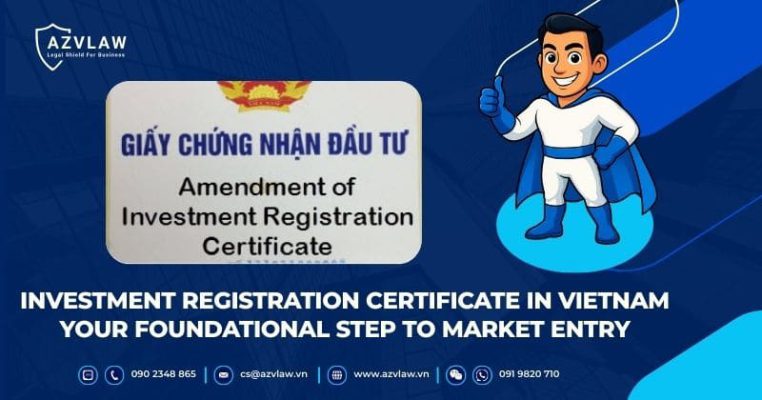
As a foreign investor looking towards Vietnam, your ambition is likely focused on growth, innovation, and seizing the abundant opportunities in this dynamic market. But before your vision can truly take root, there’s a critical foundational document that underpins all your future operations: the Investment Registration Certificate (IRC). I’ve guided countless clients through this initial, often perceived as daunting, step. While Vietnam actively courts foreign direct investment, the process of obtaining this certificate requires meticulous attention to detail and a precise understanding of local regulations. It’s more than just a piece of paper; it’s your official green light to legally commence your investment journey.
1. Steps to register a company in Vietnam
Setting up a company in Vietnam, or establishing a foreign-invested enterprise, is a pivotal moment for any investment project. To navigate this process effectively and ensure a compliant launch, foreign investors must meticulously follow a series of interconnected procedures. Over years of practice, I’ve observed that a clear, step-by-step understanding is paramount to avoiding unnecessary delays and ensuring a smooth entry.
The fundamental process for foreign investors typically involves these key stages:
- Applying for the Investment Registration Certificate (IRC): This is your initial formal approval to undertake an investment project in Vietnam.
- Applying for the Enterprise Registration Certificate (ERC): This officially establishes your company as a legal entity.
- Applying for Other Licenses: Depending on your business activities, additional specialized licenses, such as a Business License for retail or specific operational permits for conditional sectors, may be required before commencing operations.
Let’s delve into each of these critical steps.
1.1 Step 1: Register the Investment Registration Certificate in Vietnam
The Investment Registration Certificate (IRC) is the cornerstone for any foreign investment project in Vietnam. It’s the primary legal document that grants foreign investors the right and permission to conduct specific business activities within Vietnamese territory. This certificate is not merely a formality; it’s the government’s official green light for your project, essential for any international company aiming to capitalize on the dynamic Vietnamese market.
The Vietnam Authority Agency is entitled to grant the Investment Registration Certificate:
The authority responsible for issuing your IRC depends on your project’s nature and location:
- Management Boards of Industrial Parks, Export-Processing Zones, Hi-Tech Zones, and Economic Zones: These boards are authorized to receive, issue, adjust, and revoke IRCs for investment projects situated exclusively within their respective zones. They are designed to streamline processes for businesses operating in these specialized areas.
- Provincial Departments of Planning and Investment (DPI): For investment projects located outside of the aforementioned specialized zones, the provincial DPI is the primary competent authority. This includes the DPI of the province where the investor intends to place their head office or operating office to execute projects that:
- Spread over multiple provinces.
- They are executed both inside and outside industrial parks, export-processing zones, hi-tech zones, and economic zones.
Knowing the correct authority from the outset is crucial for a streamlined application process.
The dossier to apply for the Investment Registration Certificate
Compiling the complete and accurate dossier for your Investment Registration Certificate is a critical task. Any missing or improperly prepared document can lead to frustrating delays. Based on the 2014 Investment Law and its guiding decrees, the essential documents typically include:
- A written request for permission for execution of the investment project: This is the standardized application form.
- Legal status documents of the investor:
- For individual investors: A clear copy of your ID card or passport.
- For organizational investors: A certified copy of the Certificate of Establishment or an equivalent document certifying the legal status of the investor (often requiring consular legalization if issued overseas).
- An investment proposal: This comprehensive document must clearly specify:
- The investor(s) involved in the project.
- Detailed investment objectives and scale.
- Total investment capital and the proposed method of capital raising (e.g., equity, loans).
- The planned location and duration of the investment.
- Anticipated labor demand.
- Any specific requests for investment incentives from the Vietnamese government.
- An assessment of the socio-economic effects of the project, including environmental considerations.
- Proof of financial capacity: Copies of any of the following documents to demonstrate your ability to fund the project:
- Audited financial statements for the last two years (for corporate investors).
- A commitment letter from the parent company to provide financial support.
- A commitment from financial institutions to provide financial support.
- A guarantee for the investor’s financial capacity.
- A bank statement demonstrating the investor’s financial capacity.
- Documents related to the investment location:
- An office lease agreement, or other documents proving the lessor’s right to lease (e.g., Certificate of land use right, construction permit, or the lessor’s enterprise registration certificate with a real estate business function).
- Details of demand for land use; if the project does not use land allocated or leased by the State, or is not permitted by the State to change land purposes, then a copy of the lease agreement or other documents certifying the investor’s right to use the premises to execute the project must be submitted.
- Technology explanation (if applicable): For projects involving technologies listed as restricted from transfer under technology transfer laws, a detailed explanation is required. This includes names of technologies, origins, process diagrams, primary specifications, and conditions of machinery, equipment, and the primary technological line.
- The business cooperation contract (if applicable): Required if the project is to be executed under a Business Cooperation Contract (BCC).
All foreign-issued documents must undergo consular legalization and be translated into Vietnamese by a competent authority. This is a common point of oversight that can significantly prolong the process.
1.2 Step 2: Register the Enterprise Registration Certificate
Once you have successfully obtained your Investment Registration Certificate, the next critical step is to register for your Enterprise Registration Certificate (ERC). This certificate officially establishes your company as a legal entity in Vietnam, allowing you to commence formal business operations, open bank accounts, sign contracts, and recruit employees. The dossier and procedures required are largely similar to those for a company with purely Vietnamese capital, but with specific additions for foreign investors.
The dossier typically includes:
- An application form for business registration (standardized template).
- The company’s charter (Articles of Association) outlines its governance and operational framework.
- A list of members (for a Limited Liability Company) or shareholders (for a Joint-Stock Company).
- Certified copies of:
- ID card or other identification papers of individual members/shareholders/legal representatives.
- Decision on Establishment, Business Registration Certificate, or an equivalent document of organizational members/shareholders, along with a letter of authorization for their representatives. If a member/shareholder is a foreign organization, the copy of its Certificate of Business Registration or equivalent document must be consular legalized.
- The Investment Registration Certificate of the foreign investors, as prescribed by the Law on Investment. This is the crucial link from the previous step.
- A Power of Attorney (or authorization contract) if you are entrusting a law firm like AZVLAW to perform the business establishment service on your behalf.
You typically submit the application dossier at the Enterprise Registration Authority (usually the provincial DPI) through the National Enterprise Registration Portal. The business registration agency aims to issue the Enterprise Registration Certificate within 03 – 05 working days from the receipt of a complete and valid dossier.
After obtaining your ERC, it’s mandatory to make a public announcement on the National Enterprise Registration Portal within 30 days from the date of publication, along with other post-establishment procedures like carving the company seal and opening bank accounts.
1.3 Step 3: Register the Business License for conditional business lines
For certain “conditional” business lines, obtaining your IRC and ERC is not the final step. Before the official operation of a business in these specific sectors, enterprises need to obtain an additional, separate Business License or specialized permit. This license holds legal validity independent of the ERC and certifies that your company meets the specific conditions, qualifications, and standards required for that particular industry.
Examples of common conditional business lines requiring further licenses:
- Retail of Goods / Setting up Retail Establishments: According to Decree 09/2018/NĐ-CP, foreign-invested companies involved in the direct retail sale of goods to consumers (excluding certain categories like crude oil or rice) are typically required to obtain a specific Business License for goods trading activities.
- International Travel Business (Inbound/Outbound): Foreign investors are generally allowed to conduct international travel business, but specific licenses are needed, often with limitations (e.g., bringing foreign tourists to Vietnam).
- Foreign Language Training Centers: Investors must often obtain approval from the Department of Education and Training during or after the IRC process. Before operations, a separate License of Operation for the foreign language training center must be registered with the relevant Department.
- Healthcare Services, Legal Services, Banking, Securities, Logistics, Real Estate Business, etc.: These sectors have detailed, industry-specific conditions and licensing requirements that must be satisfied.
The process for obtaining these business licenses can be highly specialized, involving additional documentation, inspections, and potentially longer processing times, as they often require assessment by relevant ministries or specialized provincial departments (e.g., Department of Industry and Trade, Department of Health, Department of Justice). Understanding these requirements upfront is crucial to avoiding operational delays.
2. Proceed to register the Investment Registration Certificate
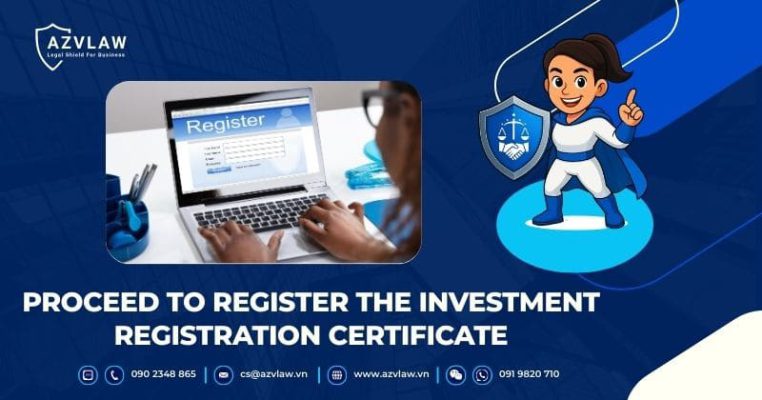
The journey to obtaining your Investment Registration Certificate follows a structured administrative path, starting with an online component and culminating in the physical submission and review of your dossier.
- Online Declaration: First, the investor must register by declaring online information about their investment project on the National Foreign Investment Information System (currently fdi.gov.vn). This step ensures your project is logged into the national database.
- Dossier Submission: Within 15 days from the date of successful filing online, the investor must submit the complete physical application file for the Investment Registration Certificate to the designated Investment Registration Authority (DPI or Management Board).
- Application Processing: After the application is received, the investor is typically provided with an online account to access the National Foreign Investment Information System. This allows you to track the processing status and results of your application.
- The Investment Registration Agency usually has 15 working days to review the dossier and issue the IRC. For more complex projects that require “investment policy approval” by higher authorities, this timeline can extend significantly (e.g., up to 35-45 working days or longer).
- Issuance or Rejection: In case of obtaining a successful Investment Registration Certificate, the investment registration agency will issue a unique code for the investment project. If the application is rejected, the agency is legally obligated to notify the investor in writing and clearly explain the reason for rejection.
My advice here is always to be prepared for potential requests for clarification or supplementary documents. Prompt and accurate responses are key to maintaining momentum.
3. Services for establishing a company in Vietnam by AZVLAW
Navigating the intricate landscape of company establishment in Vietnam, especially for foreign investors, demands not just legal knowledge but also practical experience and local insight. At AZVLAW, we pride ourselves on being your trusted partner throughout this entire journey, ensuring a smooth and compliant setup.
Our comprehensive services for establishing a company in Vietnam include:
- Strategic Consultation: Providing in-depth advice on conditions for foreign-invested companies, including foreign capital contribution ratios, restricted or conditional business lines, optimal business locations, and critical procedures before and after company registration.
- Company Type Selection Guidance: Assisting you in choosing the most appropriate company structure for your investment goals – whether a Limited Liability Company, a Joint Stock Company, or another suitable form.
- Capital Contribution Advisory: Offering clear guidance on opening capital transfer accounts and ensuring timely and compliant capital contributions.
- Dossier Preparation and Drafting: Advising on and meticulously drafting all necessary documents to register your foreign-invested company, ensuring full compliance with Vietnamese law.
- Full Representation and Liaison: Representing your interests and working directly with the Vietnamese competent authorities throughout the entire establishment process. This includes handling applications for the Investment Registration Certificate, Enterprise Registration Certificate, specialized business licenses and permits, making legal entity stamps, announcing seal samples, and managing all initial post-establishment procedures.
- Ongoing Legal & Compliance Support: Providing continuous and comprehensive consulting on accounting services, tax law, labor law, and other legal aspects that arise during your business operations in Vietnam.
Vietnam’s legal framework for investment is continuously evolving. Our seasoned lawyers are not just proficient in the law but also stay abreast of the latest changes and practical application nuances. We are dedicated to accompanying you to overcome every legal challenge you encounter, turning potential complexities into clear pathways to success.
For a confidential consultation regarding your Investment Registration Certificate application or any other complex investment and corporate legal matters in Ho Chi Minh City or anywhere in Vietnam, do not hesitate to contact AZVLAW today via HOTLINE: 090.2348.865. We are here to help you lay a solid foundation for your success with unwavering confidence.