Trụ Sở


Charting Your Academic Course: A Comprehensive Guide to Vietnam Student Visa
As Vietnam emerges as an increasingly popular destination for international education, thousands of foreign students are considering pursuing their academic goals in the country. To embark on this enriching experience, obtaining a student visa is a mandatory requirement, allowing individuals to legally reside and study within Vietnam’s borders. However, navigating the specific documentation, eligibility criteria, and administrative procedures for a Vietnamese student visa can often be intricate. At AZVLAW, we specialize in providing comprehensive and clear guidance, streamlining the entire application process to help you focus on your studies, not on bureaucratic hurdles.
1. What exactly is a Vietnam Student Visa?
When we talk about long-term academic pursuits in Vietnam, the concept of a “Vietnam Student Visa,” often referred to simply as a Vietnam Student Visa, is paramount. This is a specialized type of entry permit issued by the competent Vietnamese authorities exclusively for foreign nationals whose primary purpose for entering Vietnam is to study or participate in internship programs.
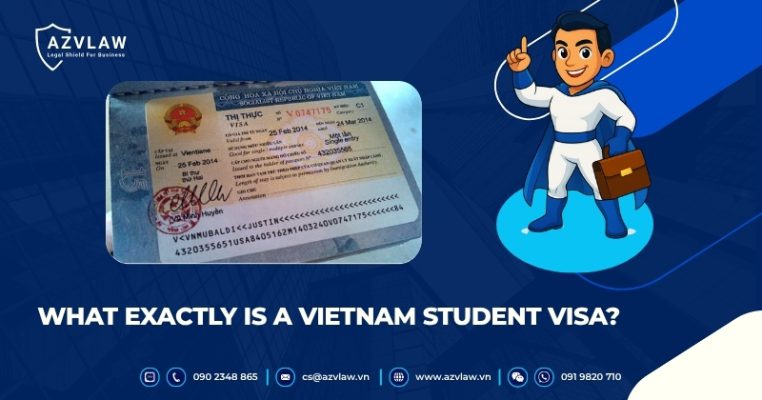
The Student Visa is officially symbolized as Visa DH. A truly significant and beneficial aspect of holding a Visa DH is that it qualifies you to apply for a Temporary Residence Card (TRC) with the DH symbol. This TRC offers substantial legal stability, allowing you to reside in Vietnam for an extended period without the recurring stress of frequent visa renewals. This freedom enables you to focus wholeheartedly on your academic commitments.
Regarding its validity, a Vietnam Student Visa can be issued for a maximum period of 12 months. However, there’s a crucial, albeit minor, principle you must always bear in mind: the visa’s validity must be at least one month shorter than the remaining validity of your passport. This ensures your passport remains legally sound throughout your entire stay in Vietnam.
2. Laying the Foundation: Key Conditions for a Vietnam Student Visa
Before packing your bags for Vietnam and stepping into campus life, it’s essential to understand the basic conditions required to secure a student visa.
Whether you’re pursuing language studies, higher education, or an academic exchange program, meeting Vietnam’s visa requirements is the first step toward a smooth and lawful educational journey. This section outlines the key eligibility criteria every international student must know before applying.
For your student visa application to proceed smoothly, meeting certain preliminary conditions is vital. Let me walk you through the fundamental requirements that every international student needs to fulfill:
- A Valid Passport is Your Gateway: This is, without a doubt, your most critical document. Your passport must be valid and recognized as a legitimate international travel document. We always advise clients to meticulously check its expiry date, ensuring it extends well beyond your intended stay (ideally, more than 12 months remaining validity) to preempt any future complications.
- A Sponsoring Entity in Vietnam: You can’t simply “arrive and enroll.” You must have an inviting or sponsoring organization, agency, or individual within Vietnam that vouches for your academic purpose. In the vast majority of cases, this will be the very university, college, or educational institution that has formally accepted your admission. This sponsorship serves as concrete proof that you have a clear purpose and are welcomed by a legitimate entity in Vietnam.
- Clearance from Entry Prohibitions: This may seem obvious, but it’s a critical point. You must not fall under any categories or circumstances that prohibit entry into Vietnam under Vietnamese law. Your background will be thoroughly vetted by the authorities regarding any prior legal infractions.
- Official Acceptance Letter from Your Institution: This is your primary “golden ticket.” You must possess a formal, written document from a Vietnamese school or educational institution confirming your official acceptance as a student. This letter will serve as irrefutable evidence of your legitimate academic purpose.
3. The Application Journey: A Step-by-Step Guide to Your Student Visa
The student visa application process, while appearing structured on paper, can in reality involve numerous nuances that require meticulous attention. By following each step diligently and preparing thoroughly, you’ll find it entirely manageable.
3.1 Essential Documentation: Building Your Dossier
To ensure your application is robust from the outset, you’ll need to coordinate carefully between your personal documents and those provided by your sponsoring institution. Here’s a detailed list:
- Guaranteeing Documents for Foreigners (Form NA2): This crucial form is prepared and signed by your sponsoring entity in Vietnam (e.g., your university). It serves as an official guarantee of your stay.
- Official Admission Letter from the Vietnamese School: Yes, this is the document the Vietnamese educational institution sends to you, confirming your acceptance as a student. Ensure you have the original or a certified copy readily available.
- Copy of the Foreign Student’s Passport Data Page: A clear copy of the page containing your personal information and photograph is required. Pay close attention to the validity: your passport must have at least 12 months of remaining validity from your intended entry date.
- Notarized Copies of Documents Proving Internship or Study Program Purpose: These could be detailed curriculum outlines, internship agreements, or any other paperwork that clearly substantiates your academic or training intent. Notarization adds legal weight to these documents.
- Stated Visa Collection Location and Intended Entry Date: You’ll need to clearly specify where you intend to collect your visa (which Vietnamese Embassy/Consulate) and your planned arrival date in Vietnam. This ensures the Immigration Department sends the approval letter to the correct destination.
- Introduction/Authorization Letter (if applicable): If you are authorizing a third party (such as AZVLAW) to act on your behalf in submitting or collecting documents, a valid authorization letter is essential.
Original Valid Passport: Last but certainly not least, your original passport itself is required, bearing the aforementioned minimum 12 months of validity.
3.2 The Two Core Stages of Application
Once your complete dossier is assembled, we move into the two primary phases of the application process:
Stage 1: Obtaining the Entry Approval Letter – For Study Purposes
Who files it? This is the responsibility of your inviting or sponsoring organization/individual in Vietnam. They will submit the application for the entry approval letter.
Where is it filed? The application is submitted to the Vietnam Immigration Department in major cities like Hanoi, Ho Chi Minh City, or Da Nang, or to the Provincial Immigration Office where your educational institution is located.
Processing Time: The review and issuance of this approval letter typically takes approximately 5 working days. Patience is key during this initial phase for both you and your sponsoring entity.
Stage 2: Student Prepares Documents to Obtain the Student Visa
Receiving the Approval Letter: After your application is approved in Stage 1, your sponsoring organization in Vietnam will receive the official entry approval letter from the Immigration Department. This is your crucial “boarding pass.”
Submitting at an Overseas Mission: You, the student, will then take this approval letter along with your valid original passport, a completed visa application form, other required documents (like passport-sized photos), and pay the necessary fee to obtain your student visa at the Vietnamese Embassy or Consulate in your home country or the country where you legally reside. It is here that the visa will be affixed into your passport.
4. Post-Arrival Steps: Settling In and Ensuring Compliance
Getting your visa is a huge achievement, but the journey doesn’t quite end there. Ensuring a smooth transition and continued legal compliance after you arrive in Vietnam is equally important.
Temporary Residence Card (TRC) Application: Remember how we mentioned the TRC with the DH symbol? Once you’ve settled in and commenced your studies, your sponsoring institution will typically assist you in applying for this card.
The TRC allows for a longer, more stable stay in Vietnam, aligning with your academic program’s duration. It saves you the hassle of frequent visa extensions and provides peace of mind. Make sure to discuss this with your school upon arrival.
Local Registration: Upon arriving in Vietnam, it’s a legal requirement for your temporary residence to be registered with the local police. If you’re staying in a dormitory or a hotel, this is usually handled by the institution or accommodation provider.
However, if you opt for private housing, ensure your landlord completes this registration for you. This is crucial for maintaining your legal status in the country.
5. AZVLAW: Your Dedicated Partner in This Academic Journey
Navigating visa procedures in a foreign country can be overwhelming, especially when your focus should be on preparing for your academic future. That’s where AZVLAW steps in.
With deep experience in Vietnamese immigration law and student visa processes, we are committed to supporting you every step of the way. From document preparation to submission and legal compliance, AZVLAW is your trusted partner in making your educational journey in Vietnam seamless and stress-free.

Dear Valued Client,
As you can now appreciate, the process of applying for a student visa, while structured, involves numerous intricate details that demand absolute precision. A minor oversight in filling out a form, a missing document, or a lack of experience in communicating with official bodies could lead to unnecessary delays, directly impacting your academic schedule. We understand you have so much to prepare for your studies abroad.
At AZVLAW, we are more than just legal advisors; we are your dedicated, empathetic, and experienced companions. Our team of seasoned lawyers and specialists possesses deep-seated knowledge and practical expertise in Vietnamese immigration law. We are committed to transforming this visa application process into a smooth, efficient, and reassuring experience for you.
We will:
- Provide In-depth Consultation: We’ll meticulously review your individual circumstances, answer every query – from the smallest detail to complex scenarios – ensuring you grasp every requirement clearly.
- Guide You to a Perfect Dossier: We provide a detailed, personalized document checklist, helping you gather every necessary paper accurately and completely, leaving no room for omissions.
- Ensure Flawless Form Completion: We’ll guide you through completing all forms (NA1, visa applications) to perfection, guaranteeing no errors that could delay the process.
- Represent and Monitor Your Application: We can act on your behalf, liaising with the relevant authorities in Vietnam to secure your approval letter, closely monitoring your application’s progress, and promptly addressing any issues that may arise.
- Mitigate Risks: Leveraging our practical experience, we help you identify and avoid common pitfalls, maximizing your application’s success rate.
Don’t let administrative anxieties overshadow your promising academic path in Vietnam. Reach out to AZVLAW today for professional, dedicated, and precise guidance. We are committed to helping you open the door to your academic future in Vietnam as smoothly and confidently as possible!
6. Frequently Asked Questions (FAQs)
As you embark on your student visa application, it’s natural to have a few common questions. Here are AZVLAW’s answers to the most frequent inquiries, hoping to provide you with greater clarity.
6.1 Do I need to attend an interview for my Vietnam student visa?
Generally, for a student visa, an in-person interview at the Embassy/Consulate is not a mandatory requirement. However, in specific cases or if your application requires further clarification, the visa-issuing authority might request an interview.
6.2 Can I apply for a student visa while I’m already in Vietnam on a tourist visa?
Under current regulations, it is indeed possible to change your visa purpose (from tourist to student) while you are in Vietnam, provided you have the sponsorship of a school or educational institution. This process requires a complete set of documents and adherence to specific conditions. We recommend contacting AZVLAW for tailored advice on your unique situation.
6.3 Can my student visa be extended?
Yes, the student visa (DH symbol) can be extended. Furthermore, after obtaining your DH visa, you can apply for a DH Temporary Residence Card (TRC), which grants you a significantly longer stay without the need for frequent visa renewals. However, both extensions and TRC applications depend on your remaining study period and the ongoing sponsorship from your school.
6.4 How long does it take to process a student visa application?
The process of obtaining the entry approval letter (Stage 1) typically takes around 5 working days. Subsequently, the processing time at the Embassy/Consulate to affix the visa into your passport (Stage 2) can take an additional 3-7 working days, varying by specific mission and current application volume. Therefore, the total time frame can fluctuate.
6.5 Can I work part-time while studying in Vietnam on a student visa?
Under Vietnamese law, foreign students are generally not permitted to engage in part-time employment with a student visa. The primary purpose of this visa is academic study. If you wish to work in Vietnam, you would need to obtain a work permit and an appropriate work visa. Working without the correct visa purpose can lead to serious legal complications.
6.6 What happens if I change schools after getting my student visa?
If you change educational institutions, your existing student visa may need to be adjusted, or you might be required to undertake new procedures related to your new sponsoring entity. This is a situation that definitely warrants professional legal advice to ensure continuous compliance with immigration laws.
For a confidential consultation regarding your student visa application or any other essential immigration and academic legal matters in Ho Chi Minh City or anywhere in Vietnam, do not hesitate to contact AZVLAW today via HOTLINE: 090.2348.865. We are here to help you achieve your educational aspirations with unwavering confidence.