Trụ Sở


A Comprehensive Guide to the Temporary Residence Card in Vietnam
As a foreign professional building your life and career in Vietnam, particularly here in dynamic Ho Chi Minh City, you’ve likely navigated the initial complexities of visas and Work Permits. However, for a truly stable and convenient long-term presence, understanding and obtaining a temporary Residence Card (TRC) is an essential next step. Many of our clients express a common concern: “What exactly is a TRC, why do I need one, and how do I get it without undue stress?”
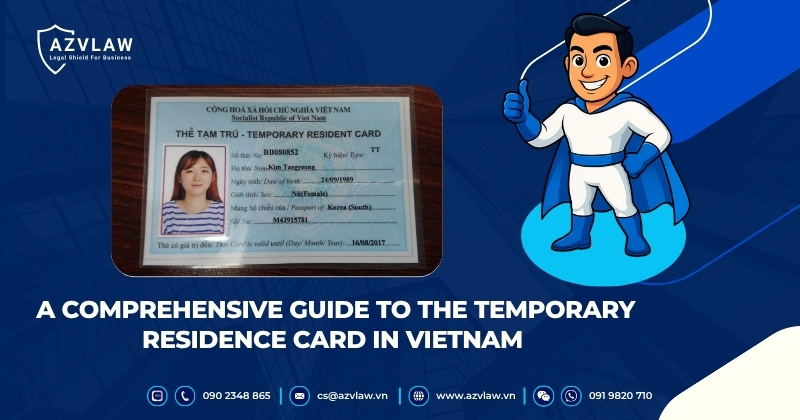
1. What is a Vietnam Temporary Residence Card (TRC)?
At its core, a Temporary Residence Card (Thẻ Tạm Trú), often simply referred to as a TRC, is an official document issued by the Vietnam Immigration Department or a competent agency of the Ministry of Foreign Affairs. Think of it as your long-term residency permit in Vietnam. It holds equal validity as a visa but allows for a significantly longer term of stay.
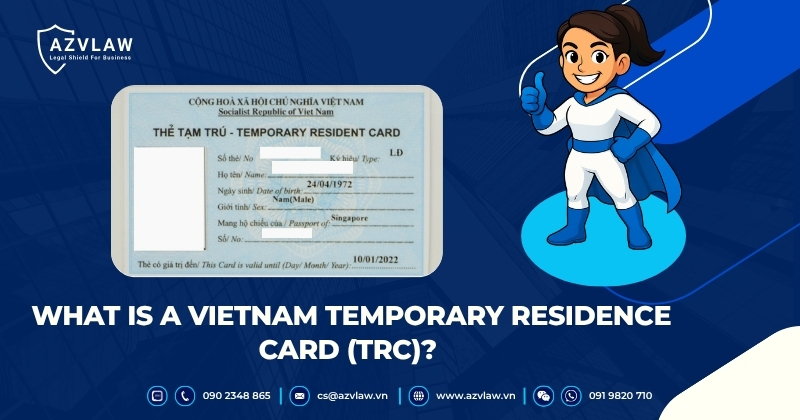
Unlike a short-term visa, which typically grants entry for a few weeks or months and requires frequent renewals, a TRC allows foreign nationals to reside in Vietnam for an extended, continuous period. Its validity is usually linked to the term of your Work Permit (or other qualifying basis) and is always at least 30 days shorter than the remaining validity of your passport.
The duration of a TRC depends on your specific category:
- From 1 to 2 years: Primarily for foreign employees and their relatives (LĐ1, LĐ2, PV1, TT symbols).
- From 2 to 5 years: Common for various categories, including investors, diplomats, and students (ĐT2, ĐT3, NN1, NN2, NG3, LV1, LV2, LS, DH, PV1 symbols).
- Up to 10 years: Specifically for large-scale investors (ĐT1 symbol).
In essence, the TRC streamlines your life in Vietnam. It serves as both your legal authorization to reside in the country and your multiple re-entry permit, eliminating the hassle and expense of repeated visa applications for every trip outside Vietnam. Foreigners holding a TRC can enter and exit Vietnam multiple times within its validity and do not have to exit and re-enter to continue their stay.
2. What Benefits Can a TRC in Vietnam Bring to You?
The advantages of holding a Temporary Residence Card extend far beyond merely permitting a longer stay. For foreign professionals and their families, a TRC offers significant practical benefits and a crucial sense of stability:
Long-Term, Hassle-Free Residency: The most immediate benefit. You are authorized to reside in Vietnam for the validity period of your TRC, without needing to apply for a new visa every few months. This is invaluable for peace of mind and simplifies your planning.
Multiple Entry/Exit Privileges: A TRC acts as a multi-entry visa. This means you can travel in and out of Vietnam an unlimited number of times during its validity, without needing to reapply for a visa each time. This is a tremendous convenience for business travel, family visits, or simply exploring the region.
Reduced Administrative Burden & Cost: Eliminate the time, effort, and expense associated with frequent visa renewals. The TRC is a one-time application for an extended period, saving you both money and bureaucratic headaches.
Foundation for Other Official Procedures: Holding a TRC often simplifies other administrative processes in Vietnam. For instance, it can be a prerequisite or significantly streamline procedures for:
- Opening a local bank account.
- Obtaining a Vietnamese driving license.
- Potentially, subject to future regulations, purchasing certain real estate (though this is still an evolving area).
Enhanced Sense of Stability: For those committed to living and working in Vietnam, the TRC provides a tangible sense of belonging and stability, allowing you to settle in and plan for the long term with greater certainty.
For our clients, these benefits translate directly into greater efficiency, less stress, and more time to focus on what truly matters – your career and life in Vietnam.
3. Who is Eligible for a Vietnam TRC?
Eligibility for a Temporary Residence Card in Vietnam is tied to specific legal statuses that indicate a long-term, legitimate purpose for staying in the country. The most common and direct path to a TRC for our foreign professional clients is through a valid Work Permit.
Generally, individuals who qualify for a TRC in Vietnam include those holding specific visa entitlements or falling into certain categories with their corresponding TRC symbols:
Foreigners with a Valid Work Permit or Practicing Certificate (LĐ1, LĐ2): This is the predominant category for working professionals. Once you obtain your Work Permit, you become eligible to apply for a TRC.
Investors (ĐT1, ĐT2, ĐT3): Foreigners who have made a capital contribution to a Vietnamese enterprise, holding a valid Investment Registration Certificate.
- ĐT1: Investors with capital contribution of VND 100 billion or more, or in nationally prioritized sectors (TRC up to 10 years).
- ĐT2: Investors with capital contribution from VND 50 billion to less than VND 100 billion, or in incentivized sectors (TRC up to 5 years).
- ĐT3: Investors with capital contribution from VND 3 billion to less than VND 50 billion (TRC up to 3 years).
Chief Representatives of Foreign Companies/Organizations (NN1, NN2): Individuals holding the position of Chief Representative for a representative office, branch, or project office of a foreign company or organization in Vietnam.
Foreigners Exempt from Work Permits: Certain individuals legally working in Vietnam but exempt from needing a Work Permit (e.g., those married to Vietnamese citizens, specific types of internal transferees who have obtained an official Exemption Certificate).
Dependents of TRC Holders (TT): Spouses, parents, and children (under 18 years old) of foreign nationals who already hold a TRC (based on a Work Permit, investment, or other qualifying status). This allows families to reside together in Vietnam.
Overseas Vietnamese (Việt Kiều) or Foreigners with Vietnamese Relatives (TT): Those holding valid documentation proving their Vietnamese origin or close familial ties to Vietnamese citizens (spouses, parents, children, grandparents).
Students (DH): Foreign students studying at Vietnamese universities or educational institutions.
Diplomats and Press (NG3, PV1): Foreigners entering Vietnam under diplomatic or press regulations.
Other Specific Cases (LV1, LV2, LS): Individuals with specific visa types (e.g., LV1, LV2 for working with Vietnamese authorities; LS for lawyers).
Crucial Point: Your eligibility is typically derived from your primary legal status in Vietnam. For the vast majority of our clients, securing the Work Permit is the foundational step that unlocks TRC eligibility. Without this underlying valid status, a TRC cannot be issued.
4. Conditions for Issuance of a Vietnam Resident Card
Beyond just being eligible, there are specific conditions that must be met for the issuance of a Temporary Residence Card. These ensure that your application is complete and compliant with Vietnamese immigration laws.
Passport and Residency Requirements
- Valid Passport: Your passport must be valid for at least 13 months from the date of your TRC application. This is a strict requirement, as the TRC’s validity will always be at least 30 days shorter than your passport’s remaining validity. If your passport has less than 13 months, you may only receive a visa, not a TRC.
- Valid Legal Basis for Stay: As discussed, you must have a valid underlying legal status in Vietnam. For most working professionals, this means a valid Work Permit that has been issued or a Work Permit Exemption Certificate. For investors, a valid Investment Registration Certificate.
- Valid Entry Visa: At the time of application, you must possess a valid Vietnamese visa, and you must have entered Vietnam using the correct visa type that corresponds to your intended long-term stay (e.g., a business visa (DN) or labor visa (LĐ) for work-related TRCs, not a tourist visa (DL)).
- Proof of Temporary Residence Registration: You must have registered your temporary residence with the local police in the area where you are living. This is a mandatory requirement for all foreigners residing in Vietnam, and proof (often a small slip of paper or a stamp in your passport) will be required.
Legal Compliance and Personal Conduct
Proper Entry Purpose: You must have entered Vietnam for a purpose that aligns with the provisions of Vietnamese Law and your intended long-term stay.
No Exit Prohibitions: You must not be currently subject to any administrative sanctions, tax obligations, or other financial obligations that would prevent your exit from Vietnam.
Clean Legal Record: You must not be under criminal prosecution, a defendant in civil, economic, or labor disputes, or subject to any criminal, civil, or economic court judgments. Maintaining a clean record during your stay is essential for successful TRC issuance and renewal.
Sponsoring Entity Requirements
Legally Operating Sponsor: For employment-based or investment-based TRCs, there must be a sponsoring company or organization in Vietnam that is legally established and actively operating. This entity must be willing to facilitate your TRC application.
Employer’s Compliance: The sponsoring employer must also be compliant with all Vietnamese labor and immigration laws. Issues with the employer’s legal standing can directly impact your TRC application.
AZVLAW’s Approach: We meticulously review your current status and documentation against these conditions. Our goal is to identify and resolve any potential issues before your application is submitted, significantly increasing your chances of swift approval. We often conduct a preliminary check to ensure all these conditions are met, saving you time and preventing frustrating rejections.
5. How to Apply for a Vietnam Resident Card?
The process of applying for a Temporary Residence Card, while detailed, becomes straightforward with expert guidance. AZVLAW simplifies this journey, ensuring every step is handled with precision.
Here’s the typical procedure for applying for a TRC based on a Work Permit:
Step 1: Prepare Your Comprehensive Dossier
This is arguably the most crucial step, as completeness and accuracy are paramount. Your dossier will generally include:
Official Application Forms:
Form NA6: The official written request from your inviting/guaranteeing agency or company for your Temporary Residence Card.
Form NA7: The guarantee application form, used if an individual (e.g., a Vietnamese spouse, parent) is sponsoring your TRC.
Form NA8: Your personal information form for the Temporary Residence Card, which you, the foreign applicant, must accurately complete.
Original Valid Passport: Your passport must be valid for at least 13 months beyond the requested TRC validity period.
Original Valid Work Permit or Work Permit Exemption Certificate: This is the primary document proving your legal right to work in Vietnam. Its validity must be at least 12 months remaining at the time of application.
Proof of Temporary Residence Registration: A confirmation document from the local police indicating your registered address in Vietnam. This is often a small slip of paper or a stamp in your passport.
Passport-Sized Photos: Typically two (02) recent photos (2×3 cm), with a white background, full face, bare head, and no colored glasses. One photo is affixed to Form NA8, and one is submitted separately.
Sponsoring Company’s Documents (if first-time submission by guarantor):
A notarized copy of the company’s Business Registration Certificate or Establishment License.
A notarized copy of the company’s Operation Registration.
A certificate or written notice of use of the seal and the signature of the competent person of the organization/company (often Form NA16).
An official Letter of Introduction/Request from the employer, formally requesting the TRC for the foreign employee.
Documents for Accompanying Dependents (if applicable):
Original marriage certificate (for spouse), which must be consularly legalized and accompanied by a notarized Vietnamese translation.
Original birth certificates (for children) also require consular legalization and a notarized Vietnamese translation.
Passports and photos for each dependent.
Separate TRC application forms (NA8) for each dependent.
Form NA7 for individual sponsorship (if applicable).
AZVLAW’s Value: We provide a precise checklist tailored to your specific situation and meticulously review every document. We handle all form-filling and ensure everything is in the correct format, preventing common errors that lead to rejections. Our attention to detail here is paramount to a successful outcome.
Step 2: Submit the Application to the Immigration Department
Who Submits: Your sponsoring employer (or an authorized legal service provider like AZVLAW acting on their behalf) submits the complete dossier.
Where: Applications are submitted at the Vietnam Immigration Department office (under the Ministry of Public Security) or the relevant provincial/city Immigration Offices where your sponsoring company is headquartered or where you, the foreigner, reside (e.g., the Immigration Department in Ho Chi Minh City). Online submission via the National Public Service Portal (dichvucong.gov.vn) is increasingly common and often encouraged, followed by presenting original documents for verification.
AZVLAW’s Efficiency: We manage the entire submission process, ensuring your application is presented correctly and efficiently, minimizing your time spent on bureaucracy. Once submitted, you’ll receive a receipt with an appointment date for the result.
Step 3: Processing and Follow-Up
The Immigration Department will meticulously review your application. If it’s complete and valid, processing will commence.
AZVLAW’s Oversight: We maintain continuous communication with the Immigration Department, monitoring your application’s progress and promptly addressing any requests for additional information or clarification. This proactive approach helps to pre-empt potential delays.
Step 4: Receive Your Temporary Residence Card
Upon successful processing and approval, your TRC will be issued.
Final Step with AZVLAW: We will notify you immediately once your TRC is ready. You (or we on your behalf) can then collect the card from the Immigration Department, presenting the receipt and required identification. This finalizes the process, granting you your official long-term residency.
6. Fee for Issuance of Temporary Residence Card and Processing Time
Understanding the financial and time commitments involved is crucial for planning your long-term stay.
6.1. Official Government Fees (as of July 2025)
The official government fees for a Temporary Residence Card depend on its validity period, as stipulated by the Ministry of Finance:
TRC valid for 1 to 2 years (e.g., LĐ1, LĐ2, TT): Approximately US$145 per card.
TRC valid for over 2 to 5 years (e.g., ĐT2, ĐT3, NN1, NN2, NG3, LV1, LV2, LS, DH, PV1): Approximately US$155 per card.
TRC valid for 5 to 10 years (specifically for large-scale investors, ĐT1): Approximately US$165 per card.
These are the direct government charges. It’s important to note that official fees are subject to change based on new regulations, so we always verify the latest figures at the time of your application. These fees do not include any service charges from legal firms like AZVLAW.
6.2. Processing Time
The standard processing time for a TRC application is typically 5 to 7 working days from the date the Immigration Department receives a duly completed and valid application.
Submission and Collection Days: While submissions are generally accepted Monday to Saturday morning, the collection of results usually occurs Monday to Friday, excluding public holidays.
Factors Influencing Time: While the standard is efficient, actual processing times can vary due to several factors:
- High volumes of applications at the Immigration Department, particularly during peak periods.
- Incomplete or incorrect documentation (which AZVLAW meticulously avoids through thorough pre-checks).
- Requests for additional information or clarification from the authorities will pause the clock.
- Public holidays or unforeseen government administrative changes.
AZVLAW’s Commitment: Our service fees for TRC applications are separate from the government fees and cover our comprehensive legal advice, meticulous document preparation, efficient submission, diligent follow-up, and troubleshooting any issues that arise. We provide a transparent quote upfront, ensuring no hidden costs, and our goal is always to expedite the process within the legal framework, keeping you informed at every stage.
7. How to Change My Vietnam Temporary Residence Card
Circumstances change, and your Temporary Residence Card may need to be updated or reissued to reflect new information or situations. Understanding this process is vital for maintaining a valid legal status.
It’s crucial to understand that an expired TRC cannot simply be “extended”; it requires a new application for “re-issuance” or “new issuance.”
Common reasons for needing to change or reissue your TRC include:
Changes in Personal Information: If your passport number changes (e.g., due to a new passport being issued), your name changes, or other personal details on your TRC are no longer accurate.
Loss or Damage: If your TRC is lost, stolen, or damaged beyond recognition. In case of loss, a police report is typically required.
Expiration of Work Permit/Underlying Basis: If your Work Permit (or the underlying basis for your TRC) expires and you obtain a new one, your TRC will also need to be updated or reissued to reflect the new validity period.
Change of Sponsoring Employer: If you change employers in Vietnam, your Work Permit will likely need to be reissued (or a new one obtained), which in turn necessitates a new TRC application linked to your new employment.
Change in Job Position/Title: In some cases, a significant change in your job role or title with the same employer might require an update to your underlying Work Permit, which would then affect your TRC.
Change in Investment Capital/Type: For investors, a change in investment capital leading to a different investor (DT) category might require a new TRC application.
The Process for Change/Re-issuance: The procedure for changing or re-issuing a TRC is generally similar to the initial application, requiring submission of relevant forms (such as NA6/NA8) and supporting documents that reflect the updated information or the reason for the change. You will typically need to submit:
A specific application form for change/re-issuance (often the standard NA6/NA8, but indicating it’s for re-issuance).
Your current TRC (if available, for return to the authorities).
Your valid passport.
Documents proving the change (e.g., new passport, police report for loss, new Work Permit, updated business registration of new employer, updated investment certificate).
Supporting documents from your sponsoring company.
AZVLAW’s Support: We guide you through the specific requirements for your situation, ensuring you provide only the necessary documents and that the application is filed correctly and promptly, minimizing any disruption to your legal status in Vietnam. The processing time for a replacement due to loss or damage might be slightly longer, typically around 15 working days.
8. When Your TRC is Tied to Your Work Permit: A Critical Interplay
This is a vital point that many foreign professionals sometimes overlook, leading to unexpected complications. Your Temporary Residence Card (TRC) is directly tied to the validity and status of your underlying Work Permit. This is a non-negotiable legal connection that demands your attention.
8.1. The Chain of Validity
Work Permit First: You generally must have a valid Work Permit (or a Work Permit Exemption Certificate) before you can apply for a TRC for employment purposes. Think of your Work Permit as the foundation upon which your TRC is built.
TRC Validity Reflects Work Permit: The validity period of your TRC will precisely match the remaining validity of your Work Permit, or be slightly shorter (at least 30 days less than your passport validity, which itself must exceed the TRC’s term). It will never extend beyond your Work Permit’s expiration date.
Expiration Alignment: If your Work Permit expires, your TRC effectively loses its validity for employment purposes, even if its stated expiry date on the card is a few days or weeks later. Continuing to reside or work in Vietnam under such circumstances becomes illegal. It’s crucial to renew your Work Permit well in advance to ensure your TRC remains active and your residency is legal.
8.2. Consequences of Disconnection
Illegal Residency: If your Work Permit expires or is revoked, and you continue to reside in Vietnam solely based on your TRC, your residency immediately becomes illegal. This is a serious violation that can lead to penalties, significant fines, and potentially deportation.
Travel Complications: You might face severe issues when trying to re-enter Vietnam if your Work Permit has expired, even if your TRC appears valid on paper. The Immigration Department’s internal system will flag the underlying expired work authorization, potentially denying re-entry at the border.
Reapplication Necessity: If your Work Permit expires and you wish to continue working and residing, you will likely need to apply for a new Work Permit (if an extension isn’t possible), which then necessitates a new TRC application. This means going through the full process again.
AZVLAW’s Proactive Counsel: We maintain a vigilant eye on the validity of both your Work Permit and your TRC. We provide proactive reminders for renewal and guide you through the synchronized renewal process, ensuring there are no gaps in your legal authorization to both work and reside in Vietnam. This integrated approach protects you from unforeseen legal complications and allows you to maintain continuous, lawful residency.
9. Navigating Common Pitfalls
While the TRC application process is well-defined, we’ve observed common pitfalls that can lead to delays or outright rejection for our clients. As your legal counsel, we want to equip you with this insight to avoid unnecessary stress and ensure a smooth application.
Here are the most frequent issues we help clients overcome:
Incomplete or Incorrect Documentation: This is by far the most common reason for delays. Missing a single form, a required certification, or even an incorrectly sized photo can halt your application. The Vietnamese authorities are meticulous.
AZVLAW’s Tip: Our role is to provide you with a precise, personalized checklist and to review every document with a fine-tooth comb before submission. We catch these seemingly minor errors before they become major roadblocks.
Passport Validity Issues: As discussed, your passport must have at least 13 months of validity remaining for a TRC to be issued. If it has less, you’ll only be eligible for a visa, even if your Work Permit is longer. Many clients overlook this simple but critical requirement.
AZVLAW’s Tip: Always check your passport expiry date well in advance. If it’s close, prioritize renewing your passport before starting the TRC process.
Discrepancies Between Visa Type and TRC Purpose: You must have entered Vietnam on a visa type that aligns with your long-term purpose. For instance, attempting to convert a tourist visa (DL) directly into an employment-based TRC is generally not permissible without exiting and re-entering on an appropriate business (DN) or labor (LĐ) visa.
AZVLAW’s Tip: We advise you on the correct entry visa strategy from the outset to ensure a seamless transition to a TRC.
Failure to Register Temporary Residence: It’s a fundamental requirement for all foreigners to register their temporary residence with the local police. Without this proof, your TRC application cannot proceed.
AZVLAW’s Tip: Ensure your landlord or employer assists with this crucial registration as soon as you settle into your accommodation.
Past Immigration Violations: Any history of overstaying visas, working illegally, or other administrative infractions in Vietnam can severely jeopardize your TRC application. The authorities have a comprehensive record.
AZVLAW’s Tip: Transparency is key. If you have any past issues, discuss them with us upfront so we can assess the situation and strategize the best possible approach.
Issues with the Sponsoring Company’s Documents: For employment-based TRCs, the sponsoring company’s legal status, business registration, and financial standing are also scrutinized. If their documents are not in order or if they are newly established, it can add complexity.
AZVLAW’s Tip: We assist companies in ensuring their internal documentation and compliance are robust, preventing their issues from impacting your application.
By being aware of these common pitfalls and by partnering with a knowledgeable legal team like AZVLAW, you can proactively mitigate risks and ensure a much smoother path to obtaining your Temporary Residence Card in Vietnam.
10. Frequently Asked Questions About Temporary Residence Cards
As a legal firm, we frequently encounter similar questions from our clients. Here are some of the most common ones we address, reflecting the practical concerns you might have:
Q1: Can I get a residence card instead of a visa when coming to Vietnam for the first time? A1: Unfortunately, no. A Tourist Visa (DL Visa) is for leisure travel and does not qualify you for a Temporary Residence Card for employment, investment, or family visit purposes. To be eligible for a TRC for these long-term reasons, you generally need to have entered Vietnam on a business visa (DN), labor visa (LĐ), or other specific visa types (e.g., TT for dependents, ĐT for investors) that align with your TRC application’s purpose.
Q2: How long does a TRC usually take to process? A2: The official processing time is typically 5 to 7 working days from the date the Immigration Department receives a complete and valid application. However, we always advise clients to allow for a little flexibility, as factors like peak season or additional requests from the authorities can occasionally extend this.
Q3: Can my family (spouse and children) get a TRC if I have one? A3: Yes. Your spouse and children (under 18 years old) are generally eligible to apply for a TRC that is linked to yours, provided you hold a TRC based on a Work Permit, investment, or other qualifying status. You will need to provide official proof of relationship (e.g., marriage certificate, birth certificates), which must be consularly legalized and officially translated into Vietnamese.
Q4: What happens if my Work Permit expires, but my TRC is still valid? A4: This is a critical point: Your TRC’s validity for employment purposes is intrinsically linked to your Work Permit. If your Work Permit expires or is revoked, your TRC effectively loses its legal basis for you to work and reside in Vietnam, even if the expiry date on the card itself is later. Continuing to stay under such circumstances can lead to serious legal penalties. It is paramount to renew your Work Permit well in advance of its expiration.
Q5: Can I work anywhere in Vietnam with a TRC? A5: No, a TRC primarily grants you the right to reside in Vietnam. Your Work Permit is the document that dictates where and for whom you can legally work. If your Work Permit specifies a particular employer and work location, you must adhere to those terms. A TRC does not grant blanket permission to work for any entity or change jobs freely.
Q6: Do I need a lawyer like AZVLAW to apply for a TRC? A6: While technically possible to apply independently, the process involves intricate legal requirements, precise documentation, and navigating specific government procedures. Engaging AZVLAW significantly reduces the risk of errors, delays, or rejections, saving you considerable time, stress, and potential financial penalties. Our expertise ensures your application is prepared meticulously, submitted correctly, and diligently followed up on, maximizing your chances of swift approval.
Q7: I’m currently working in Vietnam, but my contract is ending soon, and with it, my Work Permit and TRC. I want to stay longer, possibly to look for new employment or just to remain in Vietnam. What are my options? A7: This is a common scenario, and one we handle frequently. If you do not have a new Work Permit or other qualifying basis secured before your current Work Permit and TRC expire, your legal right to reside in Vietnam will cease. You would typically be required to exit Vietnam. To re-enter for a new purpose (e.g., job search, extended personal stay), you would need to apply for a new, appropriate visa from outside Vietnam. The longest visa period you might be entitled to without a Work Permit or other a long-term basis would depend on your nationality and the current visa policies (e.g., a 3-month tourist or business visa). It’s crucial to plan this transition well in advance to avoid overstaying.
Q8: Is it possible to extend a TRC, and when should I do that? A8: As mentioned, a TRC is not typically “extended” in the same way a short-term visa might be; rather, it’s a process of “re-issuance” or “new issuance.” You should initiate this process well in advance of your current TRC’s expiration, ideally at least 30 days prior, to ensure continuous legal residency and avoid any penalties for overstaying. This timing also allows for any unforeseen processing delays.
For a confidential consultation regarding your temporary residence card Vietnam application or any other complex immigration matters in Ho Chi Minh City or anywhere in Vietnam, don’t hesitate to contact AZVLAW today via HOTLINE: 090.2348.865. We’re here to help you navigate your stay with unwavering confidence.